CUP-SHAPED NESTS
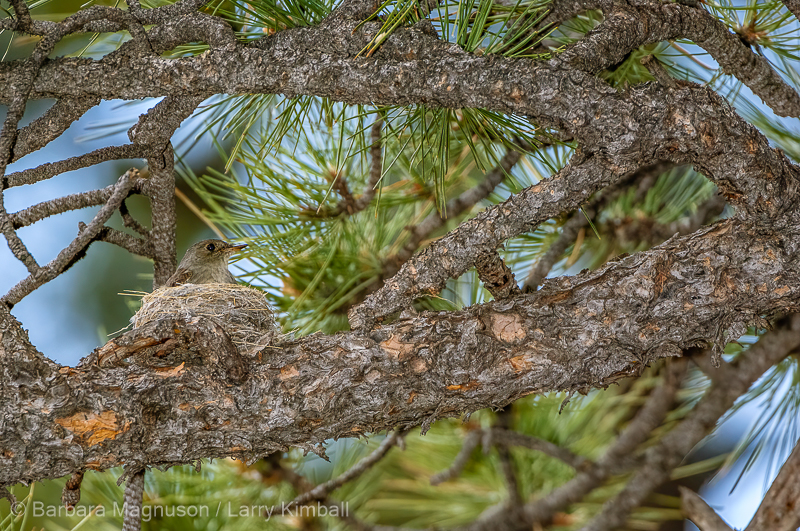
The next step up from a simple platform nest is a cup-shaped nest and is probably the most common, familiar and numerous nest type that most people consider the typical “ bird’s nest”. They are distinguishable because they have a definite inside and outside and the inside is normally lined. The overall size, dimensions, and depth of the cup may differ, and some birds build distinct inner and outer cup layers. While normally built in trees where the cups are often bound or cemented along tree branches or wedged into tree forks they can also be nestled on ledges or in any number of unique places. Last year we had a Western Wood-Pewee pair build their cup-shaped nest on the top and backside of an old decorative wreath hung on the door of our tiny guesthouse.
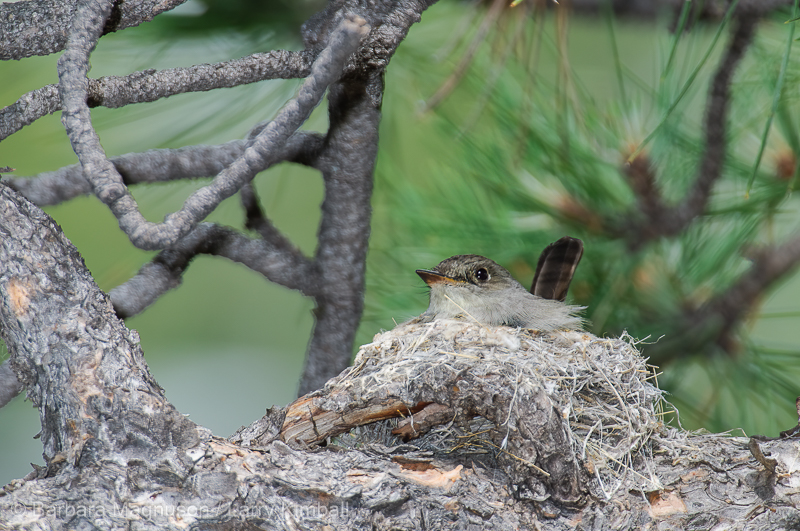
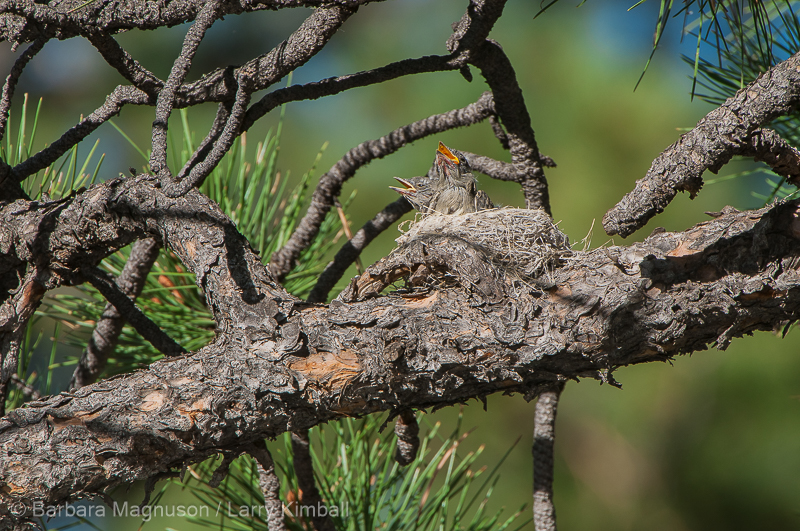
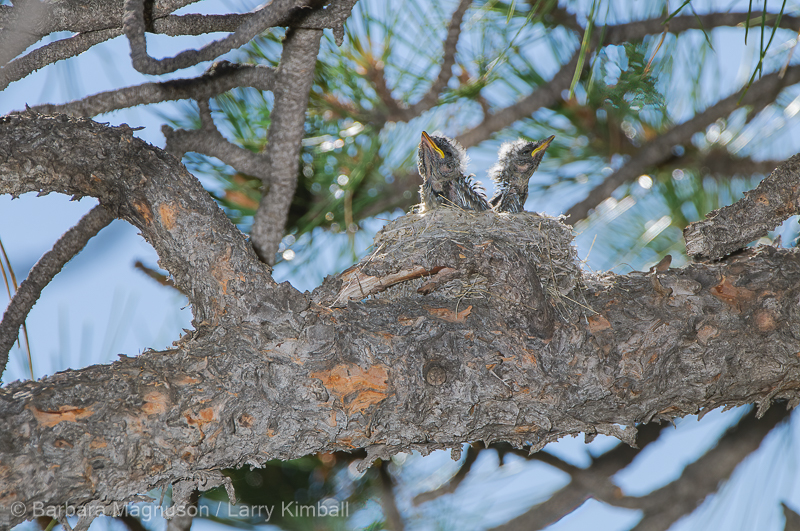
This Western Wood-Pewee (Contopus sordidulus) below chose to build her nest securely attached to the top of a ponderosa pine limb with a variety of grasses, plant down, fuzz and shed fur and wrapped around a small broken branch to anchor it.
Cup-shaped nests require more effort to make compared to the previous categories. But they also give more protection to the eggs and young birds. Different birds’ nests take different lengths of time to build from a day or two up to 2-3 weeks to complete.



Birds build cup-shaped nests using a mixture of substances. Thrushes like the American Robin (Turdus migratorius) build nests of grassy material, leaves, pine needles, weeds and fine twigs sometimes reinforced with mud and at times lined with moss and feathers.
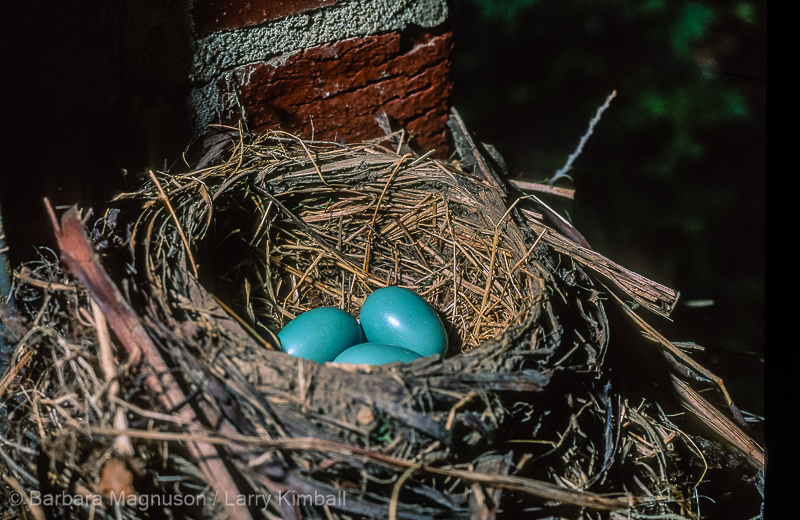
The extreme to the following delicate and intricate cup-shaped nest of hummingbirds, are the large scraggly looking structures built by crows. The initial outside of a crow’s nest is built of twigs and grass glued together with mud. Within this rough exterior, the crow makes a deep cup and lines it with moss and feathers. Crows build very well and their nests last for several years. But unlike the closely related but larger Raven (Corvus corax) they never reuse a nest. Birds, like the American Kestrel (Falco sparverius), Merlins and other falcons are opportunistic non-nest builders and will to use a crow’s nests once the crow is done.
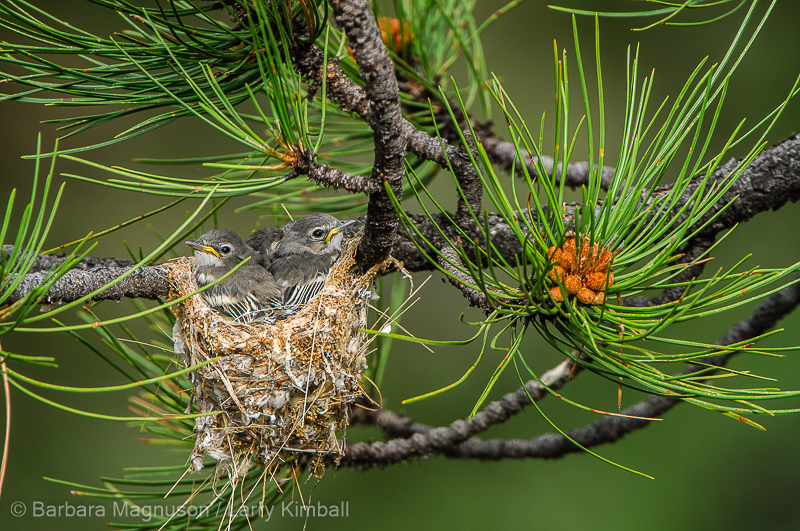
Another intricately built nest that seems a cross between the cup and the upcoming pendant-style is that of the Dusky Flycatcher (Empidonax hammondii). Grasses, seed heads, lichens and even spider webs are woven suspended from and supported by criss-crossing pine branches.

One of my favorites are the tiniest cup-shaped nests that belong to the hummingbirds, the Trochilinae family, which build perfectly shaped thimble-sized nests of leaves, moss and spiderwebs. Often the female bird builds the entire nest on the wing, hovering while building up the shape. Hummingbird nests are the most amazing architectural creations that protect and nurture some of the world’s most delicate birds. It may only be five to eight weeks from the time nest construction begins until the maturing birds leave home, but observing hummingbird nests can be a rewarding and enchanting experience for birders.


Hummingbirds choose safe, sheltered locations for their nests, ensuring that their hatchlings are protected from sun, wind, rain, or predators. Most commonly nests are placed on the top of a forked branch of a tree, along thin plant branches, or sheltered in dense bushes. Thickets or thorny bushes are especially preferred for the extra protection they provide. These flexible 1-inch nests are cleverly hidden on deciduous tree twigs and shrubbery, appearing as bumps or a mound of moss. I practically stumbled on the following nest complete with hummers at eye level while exploring a natural area looking not for nests but petroglyphs!

The height of the nest varies greatly depending on the hummingbird species and what suitable nesting locations are available. Hummingbirds typically build their nests 3-60 feet above the ground, and the nest may be located up to a half-mile away from preferred food sources if no closer sites are suitable. Hummingbirds are resourceful, however, and different females may reuse built nests or build nests in unique locations. People have reported finding nests balanced on thin wires or clotheslines, on strands of holiday lights, inside porch lights or on top of lamps or outdoor security camera fixtures, on the top of wind chimes, statues, or other garden decorations, inside a basketball net or soccer goal net, at the top of cactus where the nest is protected by spines, on top of small pipes, ceiling sprinkler fixtures and other outdoor structures.
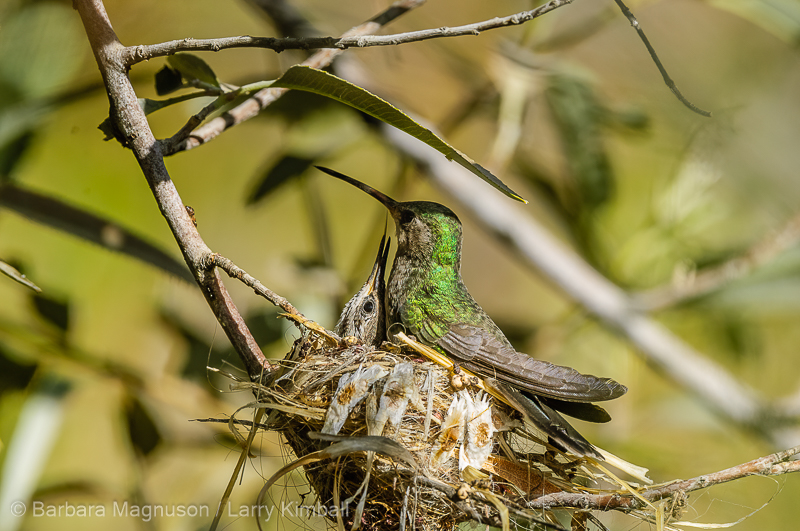
When choosing a nest location, the female bird may test the stability of the perch, by landing on it repeatedly, so if chosen, it supports her weight as well as the weight of the nest and her growing chicks. Because hummingbirds weigh so little, nearly any perch can be suitable as a nesting site.
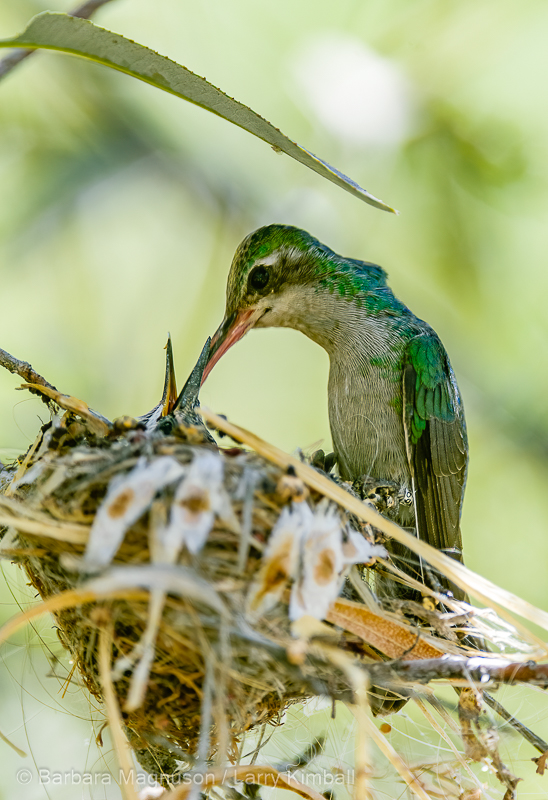
Hummingbird nests are built entirely by the female bird. After mating, male hummingbirds don’t have any part in choosing nesting sites, gathering nesting materials, or raising chicks. The female, however, will spend several hours a day for five to seven days collecting materials to build her nest.
The nest is made from soft, downy, and flexible materials; most commonly plant down from thistles, dandelions, or cattails, spider silk, cotton fibers, small bits of bark or leaves, feathers, fuzz, fur, or hairs from leaves. It is held together with spider silk and resin, which also secures it to the tree. These materials are woven together into a dense cup that is frequently decorated with moss, lichen, or other materials for camouflage. The edge of the cup is curved slightly inward to protect the eggs from tipping out in high winds, and spider silk used to bind the nest together gives it elasticity to enlarge as the hatchlings grow and move.
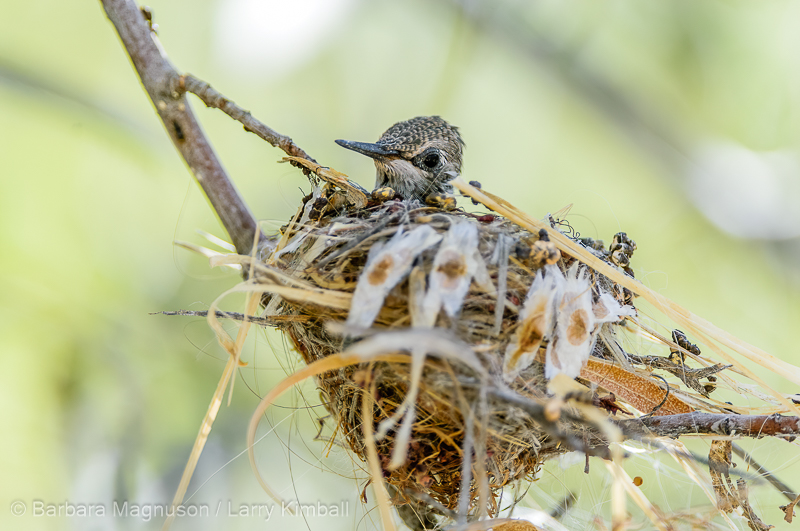

A hummingbird typically lays 2 elliptical-shaped, jelly bean-sized eggs. The nest expands to accommodate the growing hatchlings. Exact nest dimensions vary depending on the species of hummingbird, the materials used to create the nest, and how the nest must be constructed to fit its location. Most hummingbird nests are 1.5 inches in diameter, roughly the size of a large walnut, ping-pong ball, or golf ball. Ruby-throated hummingbirds have nests about the size of a thimble.
Once hatched, the birds grow rapidly and leave the nest 18 to 28 days later. The nest must accommodate their changing size since young hummingbirds will not leave the nest until they are nearly the size of adult birds and can fly on their own. Furthermore, the female parent will frequently patch and repair the nest even after the chicks have hatched to ensure it stays durable as long as necessary. This is unlike many other songbirds such as the above mentioned Dusky Flycatcher, the Western Wood-Pewee, American Robin, which will leave the nest several days earlier as they learn to fly and continue to grow and gain weight. There are no trial runs for the hummingbird fledglings.
Most hummingbird nests last for only a single brood of eggs or for one season if multiple broods are laid as the nests stretch and move as they are used. So while that female will not reuse it, if the location remains suitable, the female or her offspring may return year after year to build a nest nearby or on top of the remains of the previous nest. The Broad-tailed Hummingbird (Selasphorus platycercus) may build a nest in the same tree and the Calliope Hummingbird (Selasphorus calliope) will stack a new nest on top of the old one the following year. Old nesting material may be recycled for new construction, and the birds are often seen stealing nesting material from other hummingbirds as well.
Next: Cavity Nests

 Pronghorn Run