Images, Thoughts on Travel, Equipment and Techniques that somehow relate to Nature & Wildlife Photography.
Avian Architects: Part 5
CAVITY About 85 species in North America make nests using cavities, birdhouses, gaps in structures or holes found in tree hollows, telephone poles, abandoned buildings and more.
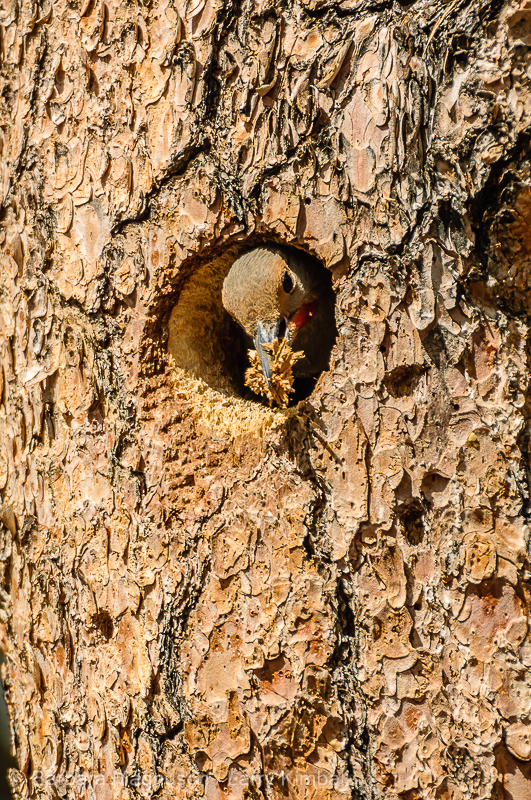
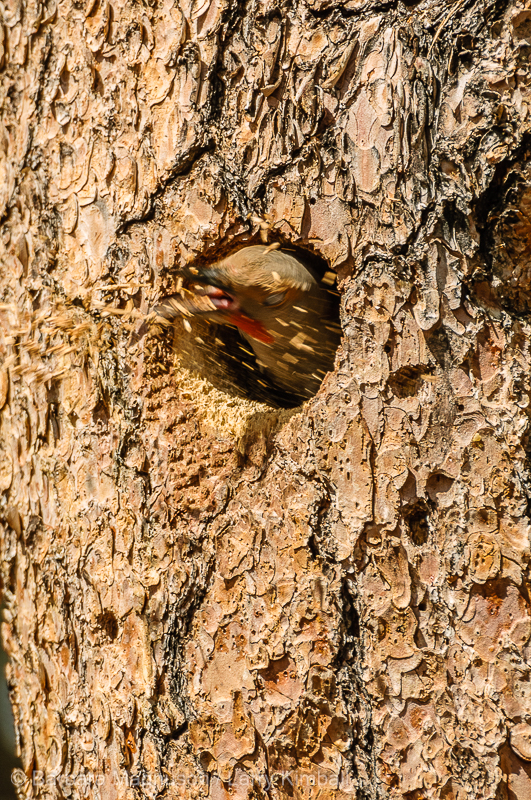
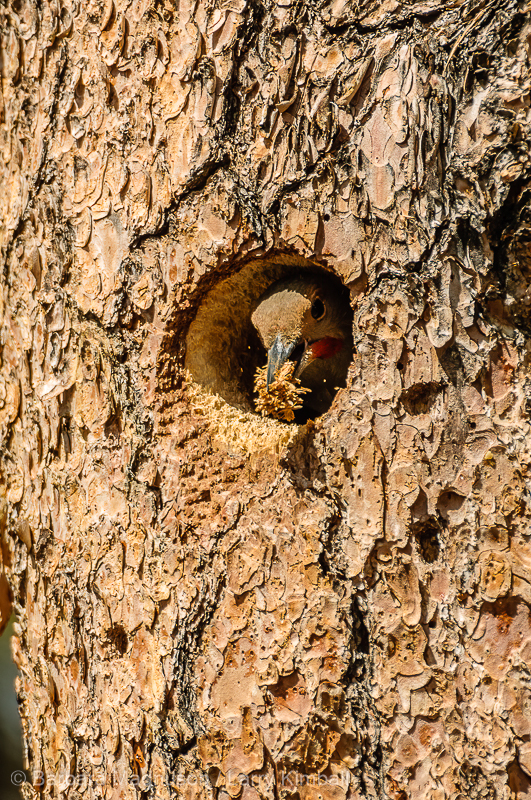
Of the birds that use nest cavities, most woodpeckers (Picidae) including the northern flicker [Colaptes auratus] and red-naped sapsucker [Sphyrapicus nuchalis] tend to be the species that do the hard work of excavating many of the tree cavities. Fewer birds excavate their own holes in trees. But of those that do, the woodpeckers are by far the best known. The cavity using opportunists include bluebirds (Sialia), chickadees (Paridae), house sparrows, house wrens [Troglodytes aedon], nuthatches (Sitta), the bridled titmouse [Baeolophus wollweberi], violet-green swallows [Tachycineta thalassina], many parrots, and even some small owls such as the northern saw-whet owl [Aegolius acadicus]. Red-cockaded woodpeckers nest in cavities that can take years to construct in a living tree. They live in groups and will have as many as four helpers. These birds choose cavities that accommodate their species-specific size.
Northern Flicker [Colaptes auratus] excavating nest hole in Ponderosa Pine; Fremont County, CONorthern Flicker [Colaptes auratus] excavating a nest hole in a Ponderosa Pine; CONorthern Flicker [Colaptes auratus] nesting, flinging sawdust from nest hole excavation in Ponderosa PineNorthern Flicker [Colaptes auratus] with a beak full of sawdust excavating nest hole in Ponderosa Pine; Fremont County, CONorthern Flicker [Colaptes auratus] nesting; flinging sawdust while excavating cavity nest.Northern Flicker [Colaptes auratus] nestlings reaching for a meal; Fremont County, CONorthern Flicker [Colaptes auratus] nestling, soon to fledge, begging for a meal; Yellowstone NP., Wyoming
Cavity-nesting birds are common and will either excavate their nesting cavities in soft, decaying wood or use natural cavities in trees, snags, or cacti. Often these excavated holes are tunnel or chamber-like, extending downward into the tree. The interior cavity may be bare or lined with a variety of materials such as grasses, sawdust, fur, moss, or shredded bark materials. This lining may form a cup-like nest to further protect the eggs and hatchlings.
Western Bluebird [Sialia mexicana] nest inside a bird house with eggs; Fremont County, CO
Making a nest in a hole that already exists in a tree is not really an architectural feat, as it involves little effort on the bird’s behalf. Still, holes in trees, alive or dead, make excellent nest sites and numerous birds use them.
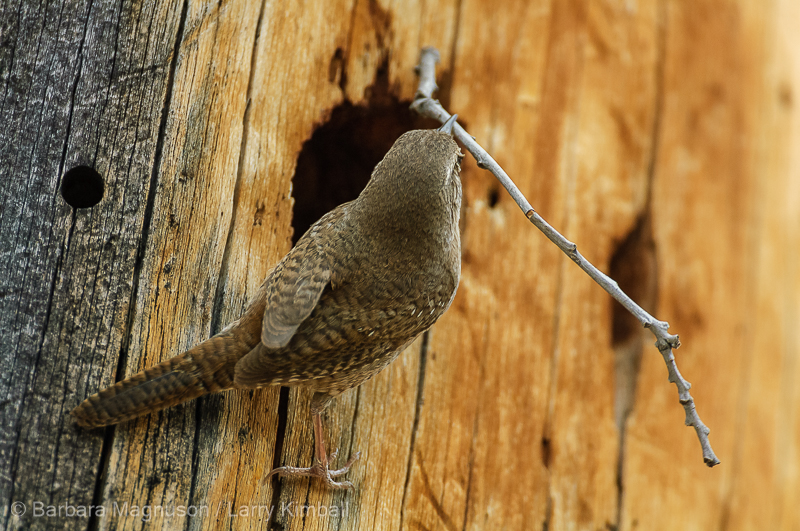
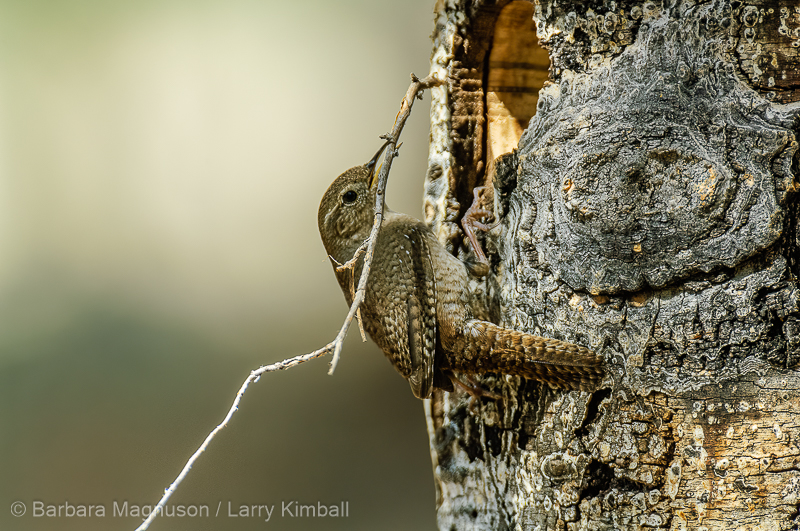
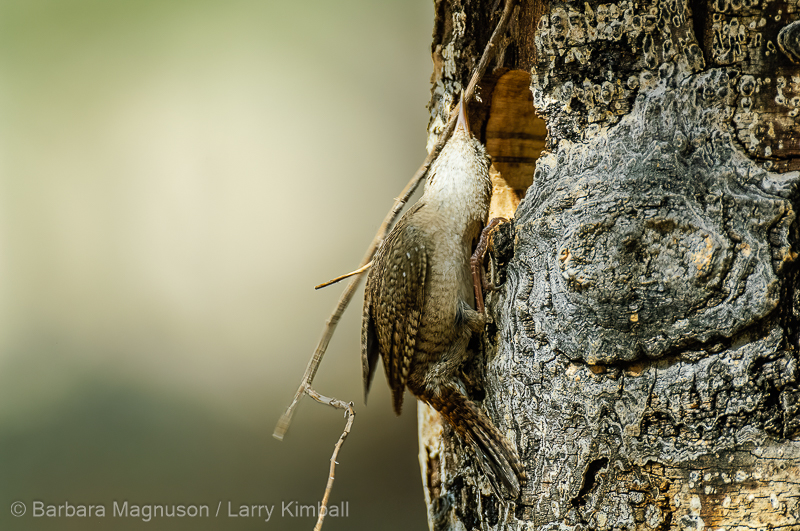
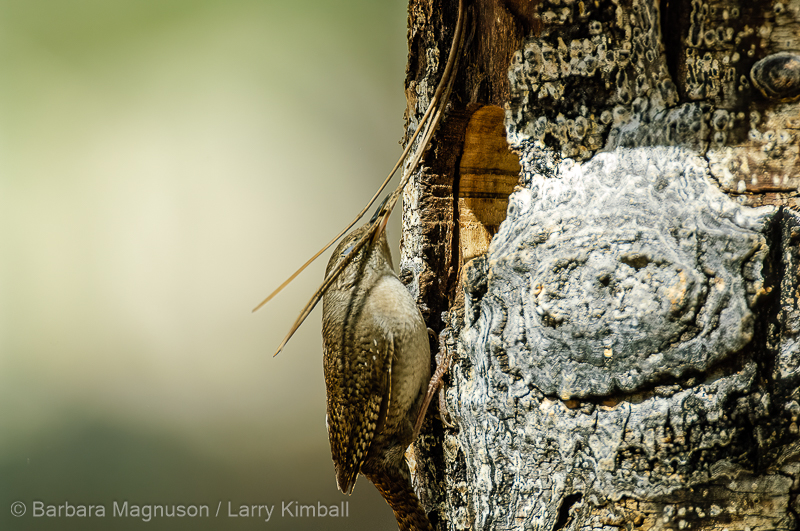
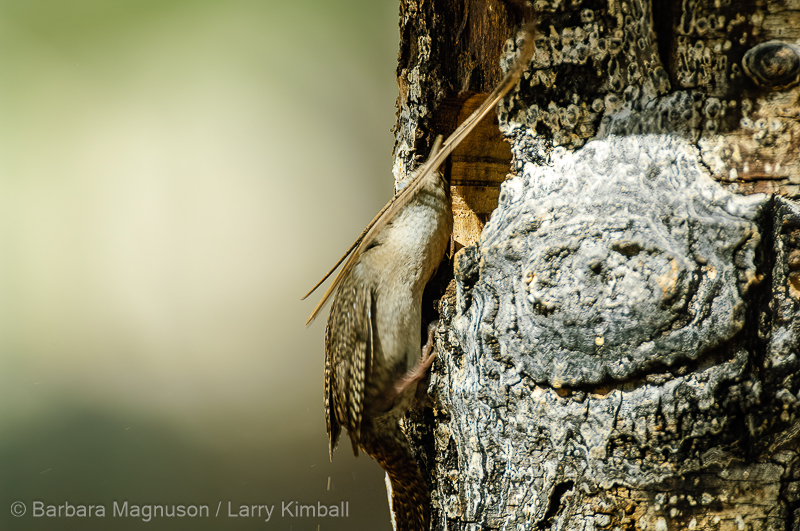
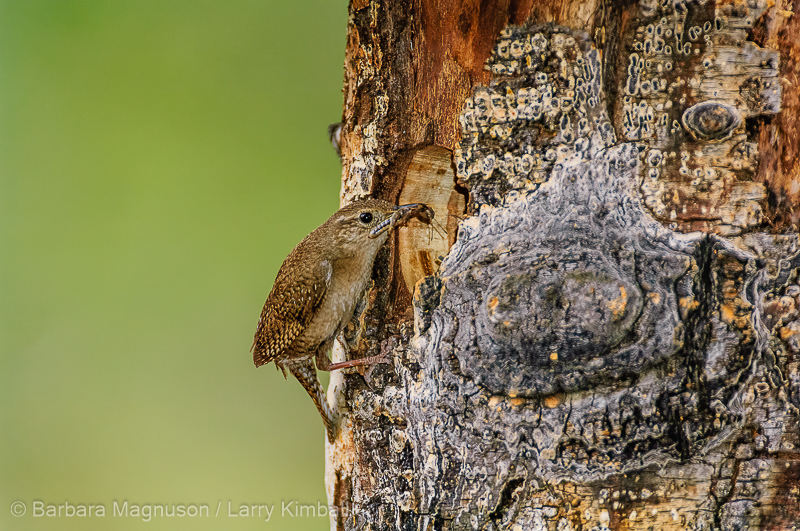
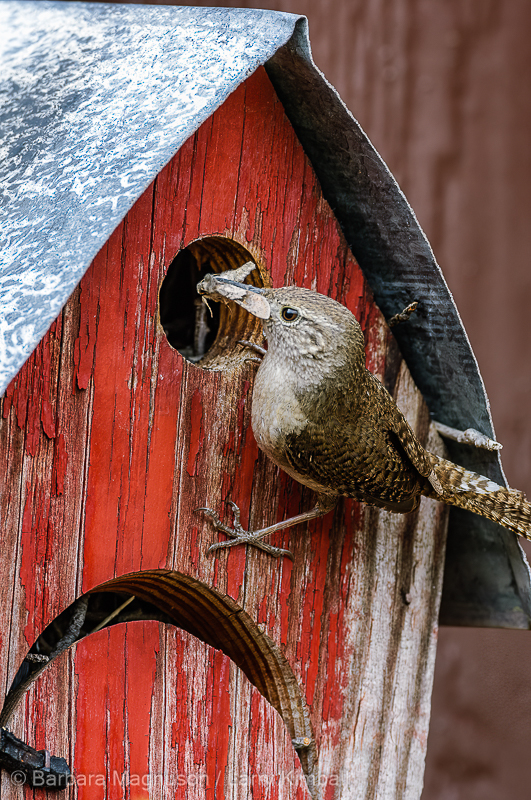
House Wren [Troglodytes aedon] stuffing a twig into nest entrance already excavated by previous resident; Fremont County, ColoradoHouse Wren [Troglodytes aedon] carrying twigs, even unwieldy ones will go into a nest hole and any size will doHouse Wren [Troglodytes aedon] contortionist lining up a twig to stuff into a nest hole can be a challengeHouse Wren [Troglodytes aedon] manipulating pine needles into the nest hole. Even pine needles can be awkward.House Wren [Troglodytes aedon] at nest hole entrance, maneuvering pine needles into the cavity; Fremont County, ColoradoHouse Wren [Troglodytes aedon] carrying twigs into nest hole; Fremont County, ColoradoHouse Wren [Troglodytes aedon] carrying twigs into nest hole. There can’t be too many, right?
Once the job is done it’ll soon be time to handle the hardest work. Raise those kids!
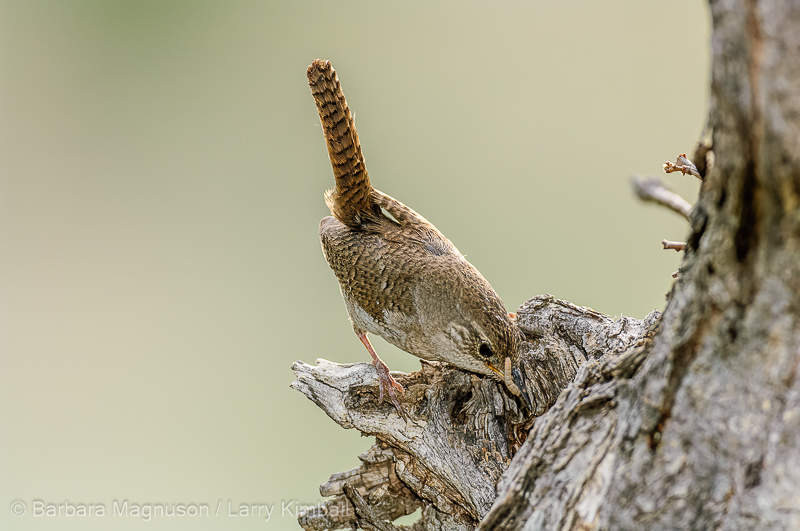
House Wren [Troglodytes aedon] adult carrying food for nestlings in the nest; Fremont County, Colorado
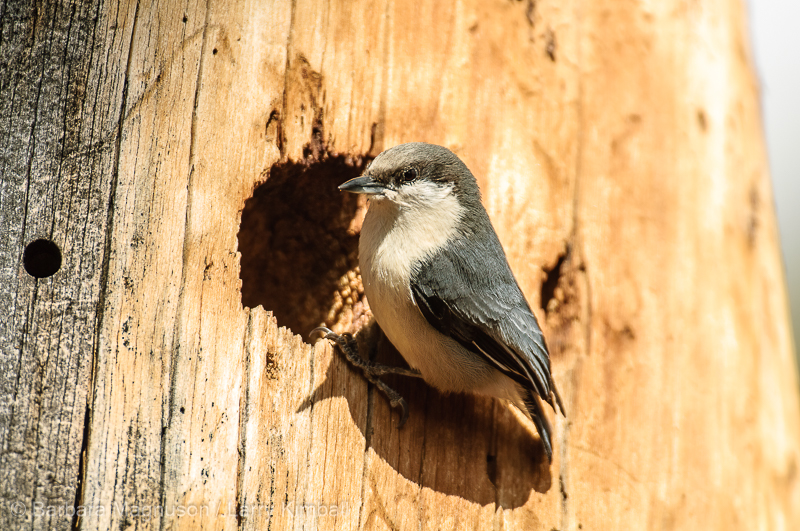
Some, like this House Wren [Troglodytes aedon] and several of its relatives, as well as various Flycatchers use existing holes to nest in. They make very little modification to the hole except to supply some lining as nest material. Others, like the many hole nesting Parrots and the Pygmy Nuthatch [Sitta pygmaea] and their relatives, will modify existing holes to varying degrees.
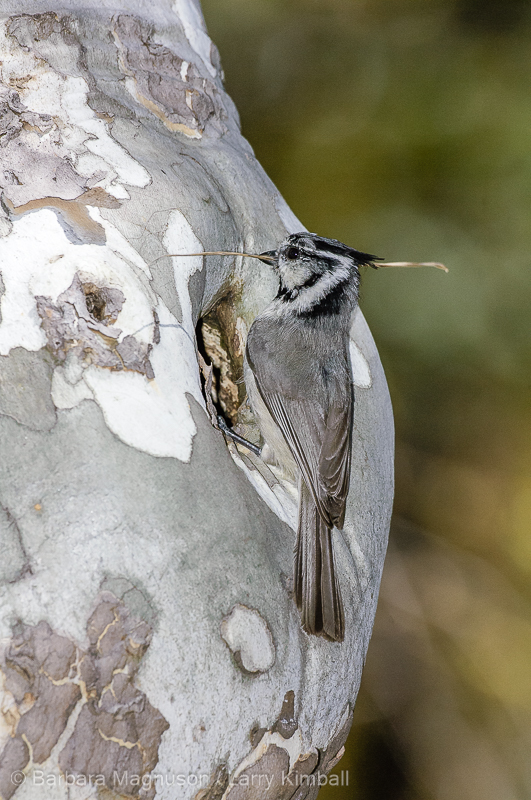
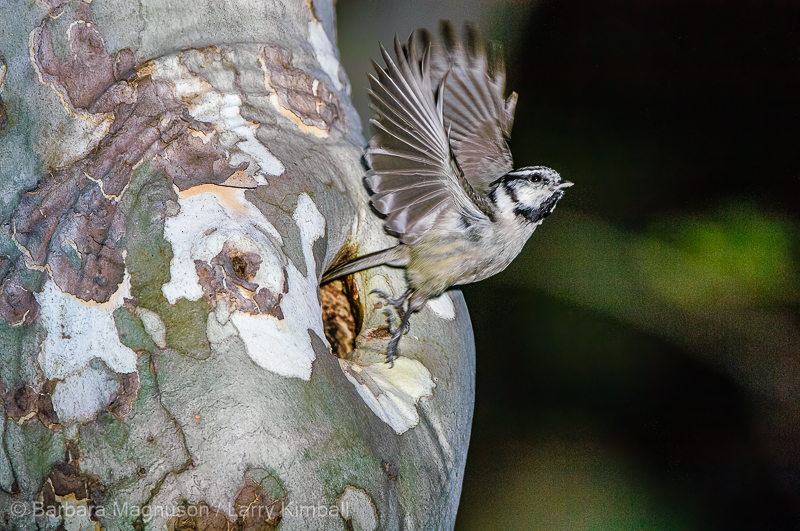
Pygmy Nuthatch [Sitta pygmaea] at nest hole entrance in pine snag; Fremont County, ColoradoBridled Titmouse [Baeolophus wollweberi] bringing nest material into a cavity created out of knothole; Cave Creek Canyon, ArizonaBridled Titmouse [Baeolophus wollweberi] carrying more nest material into nest hole; Cave Creek Canyon, ArizonaBridled Titmouse [Baeolophus wollweberi] bringing a butterfly meal in to nestlings; Cave Creek Canyon, ArizonaBridled Titmouse [Baeolophus wollweberi] emerging from nest hole; Cave Creek Canyon, ArizonaRed-naped Sapsucker [Sphyrapicus nuchalis] adult feeding young in aspen tree cavity nest; Kebler Pass, Gunnison National Forest, ColoradoRed-naped Sapsucker [Sphyrapicus nuchalis] adult with a beak load, feeding young in aspen tree cavity nest; Kebler Pass, Gunnison National Forest, ColoradoWestern Bluebird [Sialia mexicana] male feeding young eagerly waiting with a gaping beak; Fremont County, ColoradoWestern Bluebird [Sialia mexicana] adult feeding nestlings in a Ponderosa PIne snag cavity nest; Fremont County, ColoradoMountain Bluebird [Sialia currucoides] male doing his part in feeding the brood; Yellowstone NP., Wyoming
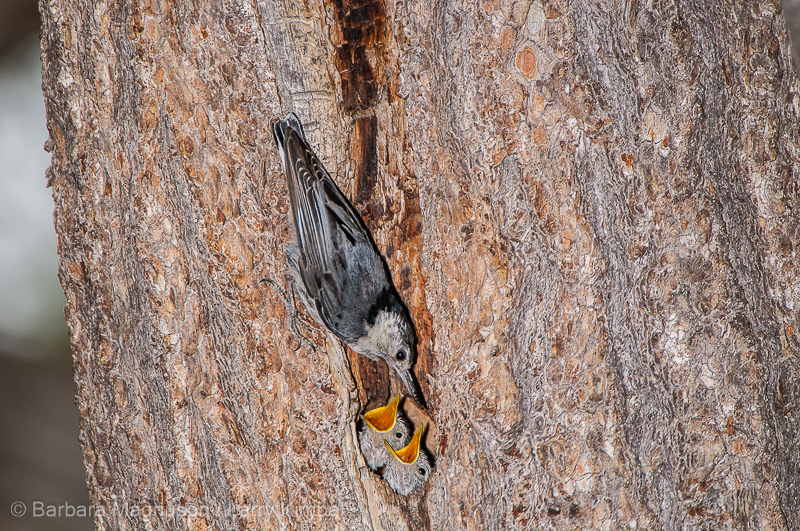
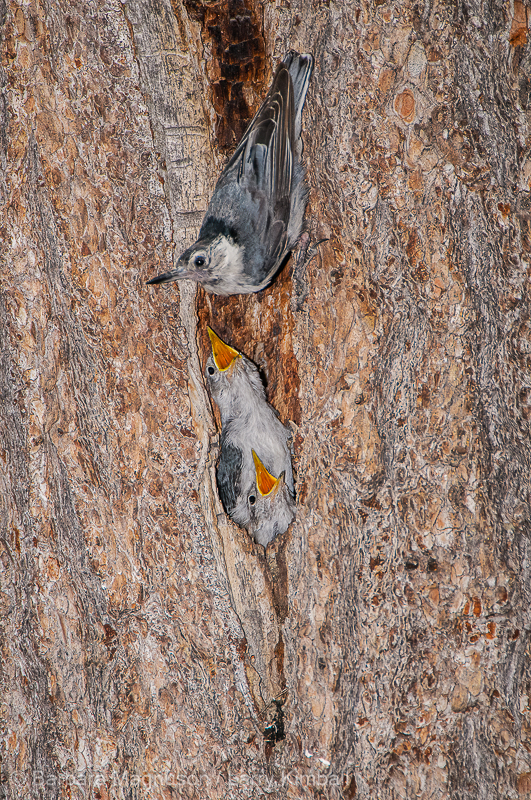
Other tree cavities aren’t necessarily created by other birds. In this example, these white -breasted nuthatches have taken up residence in a natural decaying cavity in an old but living pine tree.
White-breasted Nuthatch [Sitta carolinensis] adult feeding nestlings in tree cavity; Fremont County, ColoradoWhite-breasted Nuthatch [Sitta carolinensis] adult feeding nestlings in tree cavity nest; Fremont County, Colorado
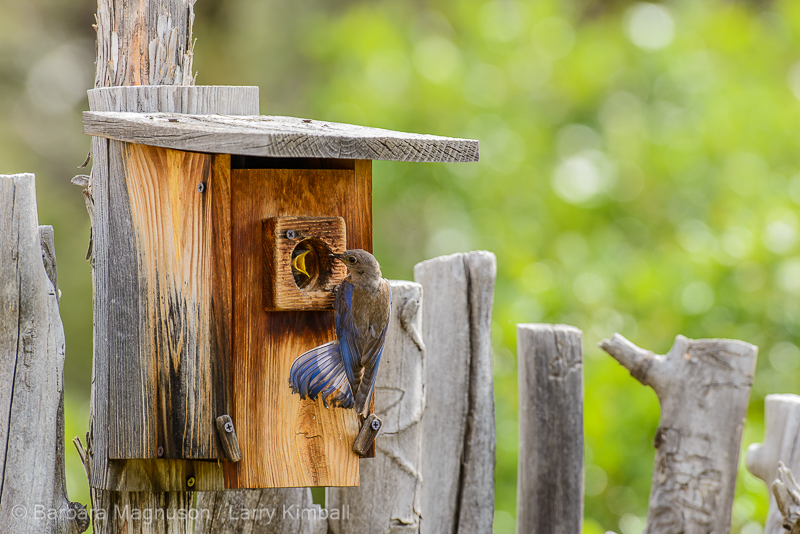
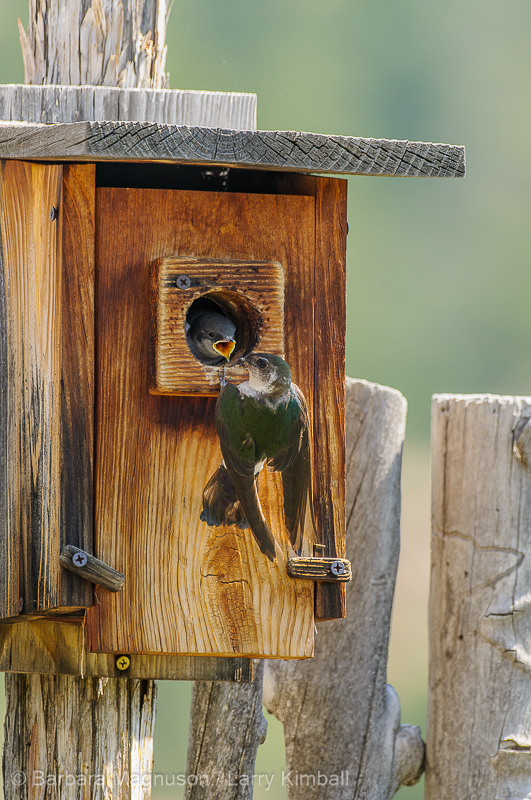
From taking advantage of tree cavities drilled out by woodpeckers to human made creations, bluebirds and some swallows, wrens and chickadees will delight in taking residence in a bird house. We’ve seen violet-green swallows compete with both mountain and western bluebirds for one of these and will use that box year after year. Chipmunks also move in when given the opportunity.
Western Bluebird [Sialia mexicana] at nest box with nestlings, feeding young; Fremont County, CO
Same bird house, different residents.
Violet-green Swallow [Tachycineta thalassina] nestling begging for a meal from adult female at entrance port; Fremont County, CO
And any house will do. House Wrens will fill up a bird house until it’s overflowing with twigs. They will also fill other nest boxes with twigs before settling on a site.
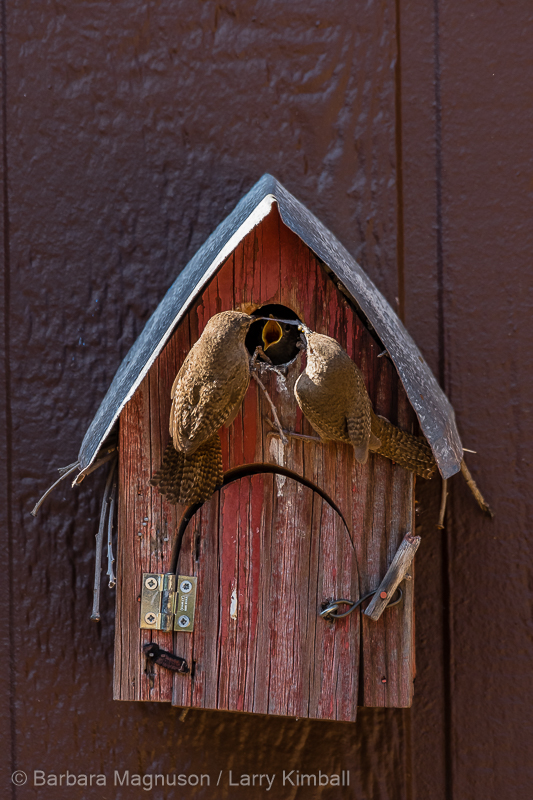
House Wren [Troglodytes aedon] adult taking food to nest box nestlings ; Cotopaxi, COHouse Wren [Troglodytes aedon] adults feeding and tending to chicks in nest box, removing fecal sac; Fremont County, CO
It’s a cooperative effort when it comes to satisfying hungry kids.
House Wren [Troglodytes aedon] adults feeding and tending to chicks in nest box; Fremont County, CO
And feeding young can be hazardous! Expecting more, this demanding chick grabs onto the beak of the adult.
House Wren [Troglodytes aedon] adult feeding a very hungry chickHouse Wren [Troglodytes aedon] nestlings peer from nest box opening. Where’s the grub?House Wren [Troglodytes aedon] adult with a grub, feeding young nestled in a Gambel’s Oak hollowed out knot hole nest. This site has been reused for years.House Wren [Troglodytes aedon] adult with a meal for hungry mouths in a Gambel’s Oak cavity nest; Fremont County, Colorado
We're nature and wildlife photographers living in the mountains north of Cotopaxi, Colorado. As naturalists and outdoor fanatics, we commune with nature and attempt to share our wildlife encounters with like-minded people.
View all posts by Pronghorn Wildlife Photography
12 thoughts on “Avian Architects: Part 5”
Amazing photos! I have to come back and look again…I came to comment on the first one but then saw that they are all amazing so must look closer…bbs.
You are too kind Judy! And we are so happy that you are enjoying our posts and photos. It’s nice to know so a big THANKS for commenting and spreading the joy.
These are such incredible photos! I can’t imagine what you went through to capture them. This is one of my favorite blogs ever. I’d love to reblog it, directing others to your site, but I don’t see a reblog button so wonder how you feel about that. You deserve a wide readership on this one! A+.
It’s just fun capturing images of wildlife. The challenge is being in the right spot, at the right time and being observant enough. Your comments and enthusiasm are so refreshing and helpful to boot. Thank YOU Judy.
Reblogged this on lifelessons – a blog by Judy Dykstra-Brown and commented:
This is one of the best blogs I’ve seen in my 13 years of blogging every day so had to share it with you! Please comment on their blog site.
We have five different woodpeckers on our small acreage — and fortunately, we also have plenty of dead trees. Fortunate for the birds, not as fortunate for us. We also have European and House Sparrows, Eastern Bluebirds, two kinds of Nuthatch, Tufted Titmouses — and lots more. We’ve had to cut down some trees that were very close to the house and going to fall soon. The birds LOVED those trees and I felt bad about having to take them down, but we need a house, too. We left the trunks back there for other creatures to inhabit.
You are obviously a bird watcher and enjoy-er as well as someone who really cares about your local wildlife. Thanks for writing and sharing your backyard birds with us.














 Pronghorn Run
Amazing photos! I have to come back and look again…I came to comment on the first one but then saw that they are all amazing so must look closer…bbs.
LikeLike
You are too kind Judy! And we are so happy that you are enjoying our posts and photos. It’s nice to know so a big THANKS for commenting and spreading the joy.
LikeLiked by 1 person
These are such incredible photos! I can’t imagine what you went through to capture them. This is one of my favorite blogs ever. I’d love to reblog it, directing others to your site, but I don’t see a reblog button so wonder how you feel about that. You deserve a wide readership on this one! A+.
LikeLike
It’s just fun capturing images of wildlife. The challenge is being in the right spot, at the right time and being observant enough. Your comments and enthusiasm are so refreshing and helpful to boot. Thank YOU Judy.
LikeLiked by 1 person
Aha.. I do see a reblog button now, so I am reblogging. Will probably come back a third time myself as well.
LikeLike
Aha.. I now see the reblog button so I am going to go ahead and reblog. You deserve a wide viewership for this one!
LikeLike
Reblogged this on lifelessons – a blog by Judy Dykstra-Brown and commented:
This is one of the best blogs I’ve seen in my 13 years of blogging every day so had to share it with you! Please comment on their blog site.
LikeLike
Thank you Judy!!!
LikeLike
We have five different woodpeckers on our small acreage — and fortunately, we also have plenty of dead trees. Fortunate for the birds, not as fortunate for us. We also have European and House Sparrows, Eastern Bluebirds, two kinds of Nuthatch, Tufted Titmouses — and lots more. We’ve had to cut down some trees that were very close to the house and going to fall soon. The birds LOVED those trees and I felt bad about having to take them down, but we need a house, too. We left the trunks back there for other creatures to inhabit.
LikeLike
You are obviously a bird watcher and enjoy-er as well as someone who really cares about your local wildlife. Thanks for writing and sharing your backyard birds with us.
LikeLike
If I can keep the birds alive, maybe there’s hope for us too.
LikeLike