In this final chapter of the bird nest series, we are down to the earth in a manner of speaking. We discuss here various terrestrial nest forms from burrows, whether they are created by other creatures as with burrowing owls moving in with their friends the prairie dogs, mud nests dug into river banks or overhanging cliffs, commensal relationships between termites and birds who burrow into termite mounds, to mounds and nests built close to shores, in the middle of lakes and even floating nests, or as an aside share a saquaro cactus with benefits for all.

BURROWS are dug for nesting purposes, and some burrow nesting birds may also use a shallow cave found on the sides of cliffs. Often, birds will use abandoned burrows, such as those from rabbits or prairie dogs. Burrowing owls particularly come to mind here. Many birds nest on the ground, with nests of various levels of complexity. But far fewer birds nest within holes in the ground.

A nesting burrow is dug into the soft dirt or sand of river banks, lakes and other eroded places, excavations or guano accumulations and may be a shallow cave or a long tunnel leading to a nesting chamber unlined or padded with soft feathers and grass. Birds may excavate their own burrows or appropriate suitable burrows from other animals. Nesting in holes would appear to be more successful than nesting in the open. One survey of over 180,000 eggs revealed that non-hole nesters averaged 50% rearing success while hole nesters averaged 70%.
Commonly recognized birds that nest in overhanging cliff or sandbank holes include the colonial Bank (Riparia riparia) and Belted Kingfishers (Ceryl alcyon) along with many other kingfishers (Alcedinidae). Others included Atlantic puffins (Fratercula arctica), barbets (Megalaimidae), great hornbills, and New Zealand kiwis (Apteryx australis).
Dark-eyed Junco [Junco hyemalis] are among the ground nesters that take advantage of low to the ground cut banks, drainages and thick grasses and scrub to excavate small dirt burrows to place their nests and house their young.


MUD
Some species make nests designed to securely stick to structures. These nests may be cup- or jug-shaped and made out of mud mixed with saliva or saliva only. These nests are stuck to the walls of structures, in caves, or grottos. Saliva nests have been studied to see if they are edible for beneficial human consumption and in some parts of the world, these nests are highly prized as delicacies.

Like our ancestors and other humans around the globe forming adobe bricks to build their houses, mud is often a common resource and it makes sense that birds somewhere would have evolved to use it for nest building. Many birds build cup-shaped, mud nests which rest on boughs of trees. These nests often have straw or grass mixed in with the mud, making them stronger when dried – much like ancient bricks. Normally, these birds’ nests are lined with grasses, leaves, moss and feathers.

The best-known mud nest builders are the barn swallows (Hirundo rustica). Swallows and Martins all over the world labor during the spring to build their hemispherical nests on the edges of cliffs, on rocks and under the eaves of houses, in caves or culverts. The mud is collected in small pellets and moistened with saliva, before being applied to the wall or existing nest. This means that each day’s work gets a chance to dry out and become strong before new mud is added. If this did not happen the whole thing would collapse under its own weight. Like other mud nesting birds, the nest is normally lined with dried grass and feathers.


Examples of birds that build these nests are Barn (Hirundo rustica), Cave Swallows (Petrochelidon fulva), Cliff (Petrochelidon pyrrhonota), and swiftlets (Aerodramus fuciphagus).
MOUND
This style of nest starts as a scrape or depression in the ground but is a relatively large accumulation of nesting material such as fallen leaves, rocks, or mud in a tall cone or bell-shaped, mound structure. The eggs are buried within the nest for protection and insulation, for camouflage within the nesting materials or they may simply rest on top of the mound. The height and diameter of the nest mound will vary. The female then sits on top of the mound.

The Long-billed Curlew is dependent not only on the short grass prairie but being a shorebird they rely on nearby ponds and lakes for feeding. Their nests are nestled in among the grasses but the presence of water may influence their nest site choices and bring them back year after year. Curlews are experts at distracting observers who with a little luck in spotting nest building activity will actually find a nest. To make themselves inconspicuous, incubating adults will extend their necks forward and rest their heads on the ground. Ground nesters are always at the mercy of predators such as bull snakes and coyotes, the egg hunters.
One of the best examples is the nest of Adelie Penguins which is basically a mound of stones that serves as protection against flooding. The trumpeter swan (Cygnus buccinator) and flamingos (Phoenicopterus) make mound nests, which can be over 12 inches in width. Sandhill Cranes (Grus canadensis), Mute Swans’ (Cygnus olor) and Trumpeter Swans (Cygnus buccinator) nests are an example of a different form of simple nest construction. They choose the site, they flatten the vegetation and lay the eggs. Then, the female swan builds up the nest around her by pulling vegetative material within reach so that it forms a bowl surrounding her similar to the sandhill crane pair who builds a large platform with nearby vegetation in a marshy area with a surrounding moat.


Birds That Build Mound Nests: Adelie penguin (Pygoscelis adeliae), sandhill cranes (Grus canadensis), whooping cranes (Grus americana), swans and most flamingo species.
FLOATING/ WATER ADJACENT
Aquatic, or water birds nest near or directly on the water. Ducks (Anatidae) nest in water-adjacent grasslands, typically scraping a small depression in the ground and then building a nest in it with vegetation. The female plucks out downy feathers from herself to line a 1-foot diameter nest and to cover the eggs.

Sandhill cranes (Grus canadensis) build their mound nests on raised land surrounded by water or less often in shallow water. Their nests are compiled by grasses,reeds and other aquatic vegetation. You will often see cranes nesting in the locality of beaver ponds and dams.


Although a number of birds build their nests at the water’s edge, several groups build them in the water. Grebes (Podicipedidae), American coot (Fulica americana), and loons (Gavia) nest directly on the water. These nests are made of floating materials such as reeds, aquatic vegetation, and cattails. They are cemented and anchored with mud so that the eggs do not sink or float away. A number of species, including the gadwall, line the sides of their nest with feathers. Coots build nests that are surrounded by water and have a foundation of cattails and bulrushes that reach the ground below.

Interestingly the Horned Coot (Fulica cornuta) which breeds on mountain lakes in the Andes where aquatic vegetation is scarce, builds a foundation of stones nearly to water level before building the actual nest.
Grebes build their nests in shallow water and though they are often anchored at one or two points, they are basically floating on the water. This is necessary because grebes, which are primarily water birds, are very awkward on land and find life easier if they can swim right onto the nest.
Two other groups of birds build nests that are completely afloat. The Northern Jacanas (Lily Trotters; Jacana spinosa) a rare visitor to southern United States, build an extremely simple, flimsy platform nest of plant matter on floating vegetation that often sink into the water while the bird is sitting. Fortunately, the eggs are waterproof, so getting wet regularly does them no harm.
The other is a species of Marsh Terns, our Black Tern (Chilodonias niger) which build conical nest mounds of broken reeds and cattails on algal mats buoyed in water up to 4 ft deep and sometimes anchored to nearby vegetation.
Deviating off subject a bit but speaking commensally outside of a dirt mound or burrow and under the classification of cavity nester, there appears to be a three way relationship between the Gila Woodpecker, the Elf Owl and the Western Blind snake. The Gila Woodpecker (Melanerpes uropygialis) breeding pair nests in holes which they excavate in the Giant Saguaro cactus, taking turns at feeding their young. The Elf Owl nests in the same hole with the Gila Woodpecker being tolerated because it has the habit of catching Western Blind snakes and bringing them alive back to the nest. The snakes are insectivores, so they benefit by having a safe home and free food in the form of avian parasites. The woodpecker benefits because it gets a reduced parasite loading, while improving the health of its young. The owl not only has fewer parasites and a free nest site, but it also gains protection for its young while hunting at night when the woodpecker is roosting in the hole. A win-win for everyone.

Thanks for bearing with me on this lengthy topic. As you can see there are so many types of bird nests with so many skill sets utilized. The take away is that nature is incredibly complicated, intriguing and just plain fascinating. When we take the time to really see what’s out there be it in our backyards or anywhere around the world, it’s a wonder to me that our species even considers leaving this planet! Space and exploration is of course how we learn but we have so much right here that we’ve yet to understand. Let’s stop climate change and preserve all that we can as best we can so we may learn everything that we can. There may be lessons for us and for our survival on planet earth.
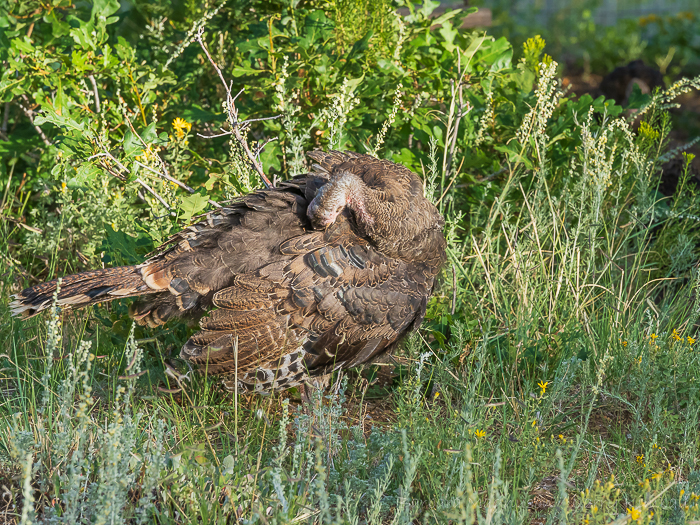
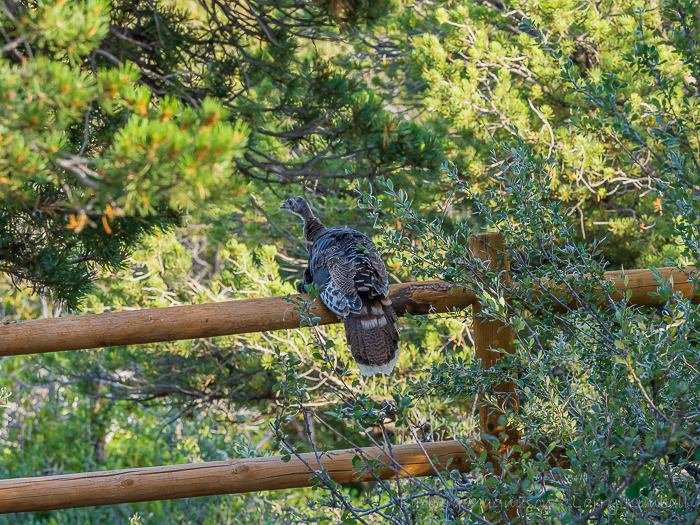
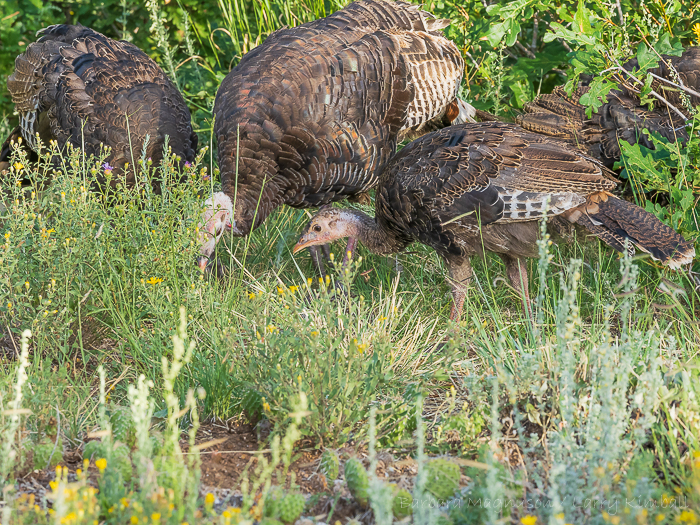
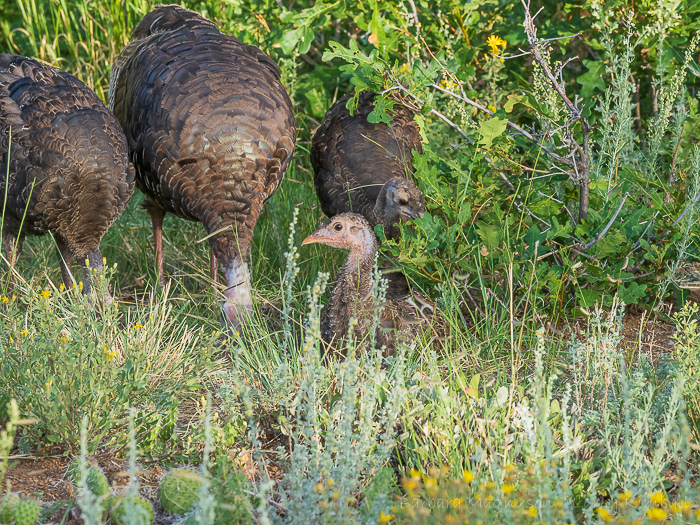
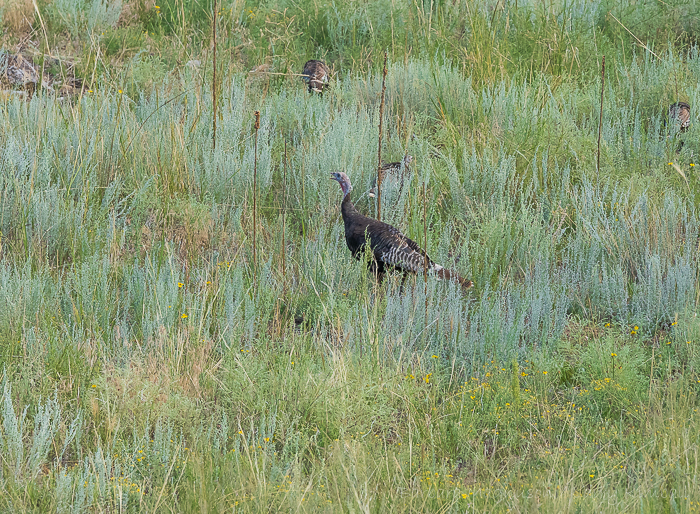
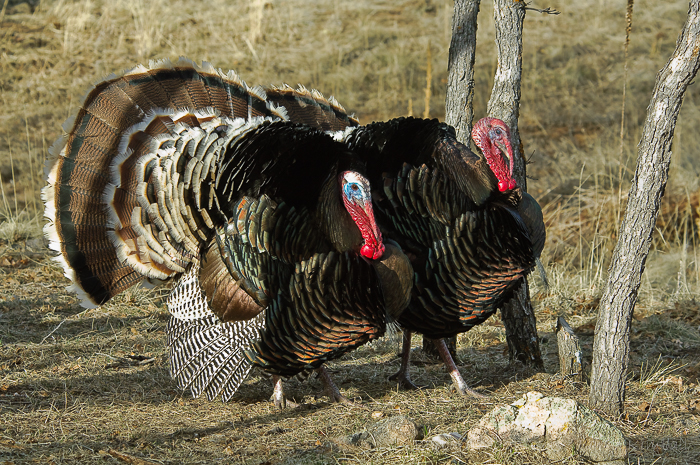
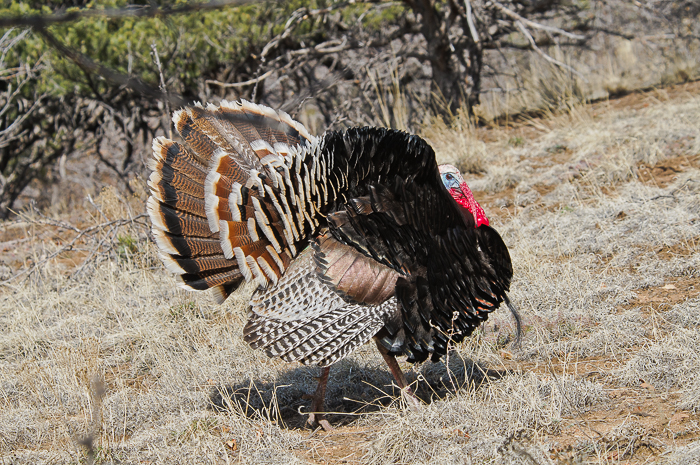
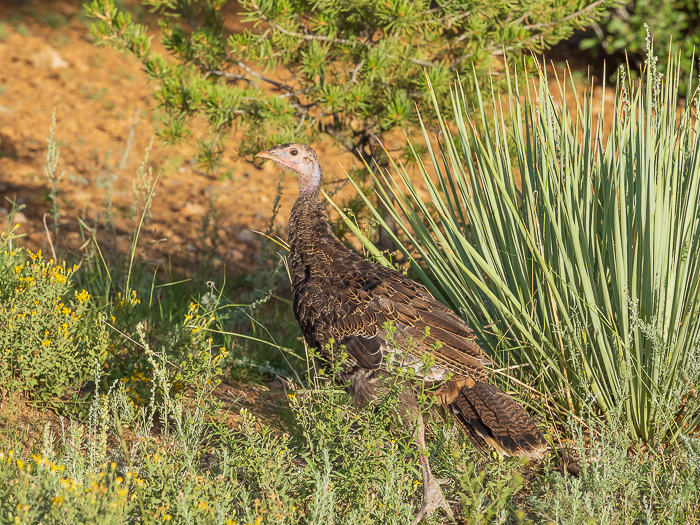
Speaking of backyards, I am hearing turkey poults cooing outside my office window. Eleven little ones with a couple hens and toms in this flock. Time to go!!! Thanks too for reading!
You must be logged in to post a comment.