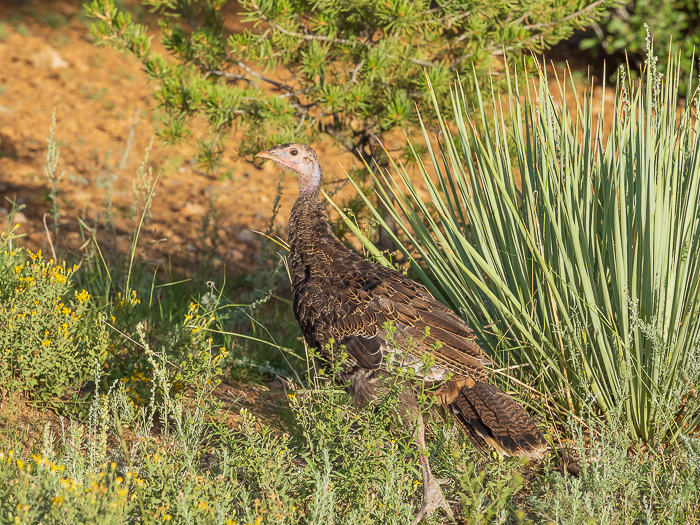
I heard them first, a quiet, whistled, bagpipey kind of sound but far more melodic (no offense if you are a bagpipe fan). Unfamiliar yet strangely recognizable, a five or six-note series, starting quietly but ending on a higher pitch with a bit more volume. Then they arrived, a line of 6 small, dusky tan birds, looking like some kind of grouse, except we have no grouse in our area. Two large turkey hens followed, and it all became clear. The two hens had brought their poults, or young, to our place for a meal. We have fed wild turkeys in the winter for years, and I’m guessing the two hens knew where to get an easy meal for themselves and their little ones. Now, we have no idea which of the poults belonged to which hen; they always arrived together and left together, whistling their “I’m here, where are you?” tune. These are the native turkey of the west, Merriam’s Wild Turkey or, for you of a scientific turn of mind, Meleagris gallopavo merriami.

they learn how to feed themselves. They rely on her for protection but become quite self-reliant very soon. They also stay together as a family unit until spring when mating season changes all those dynamics.


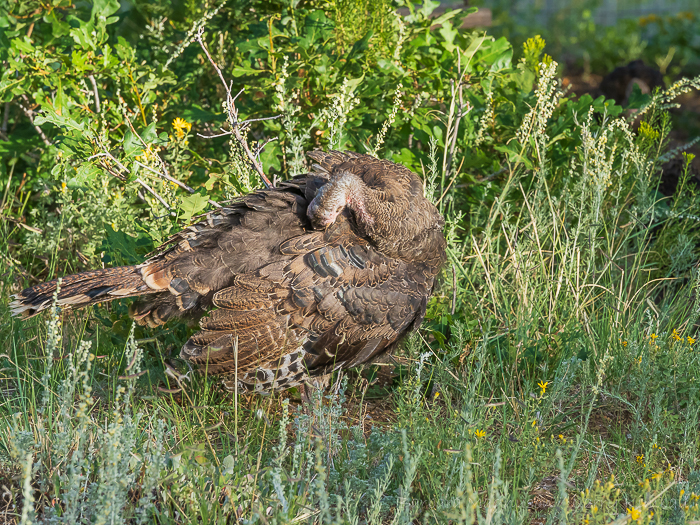
As the days passed and the small troupe of turkeys got very comfortable hanging out under the pinyon pines in our back “yard” the poults would take dust baths or flop down together on the ground and take short naps while the hens kept a sharp lookout for danger. The six became five and a little later four, two hens and all their watchfulness weren’t enough to keep all their kids safe. With their small size poults are, no doubt, a target for every predator we have around here. Coyotes and foxes come to mind. And then another family group trouped into the feed zone, one hen with eleven poults (one nest usually will have 8 to 12 eggs), this group was a little older than the first bunch and had molted into their true turkey colors.



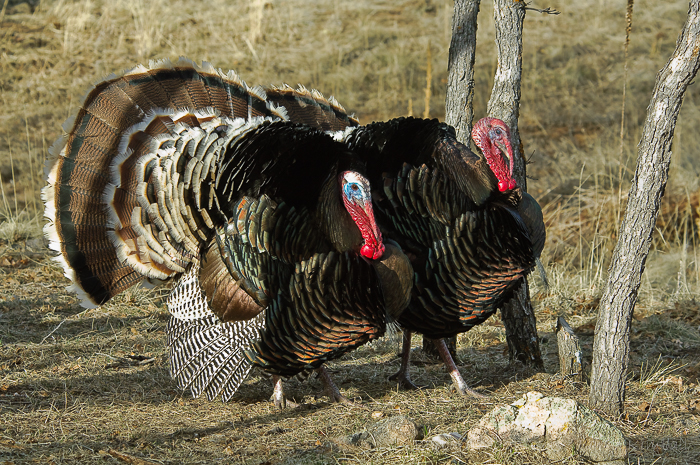
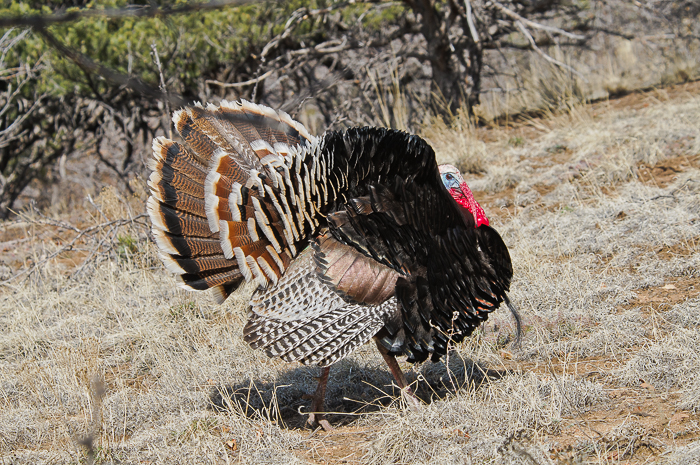
Turkey poults are insect eaters during the first summer of their lives so having these family groups show up and greedily snatch up the cracked corn we would toss was certainly different. The poults and their moms weren’t the only summer turkeys. Four toms with two hens in tow started coming around as well. Those six birds were probably the same six we fed last winter, down one from the seven earlier that winter. At one time we might feed twenty to thirty winter turkeys, November to about the first part of April.
Water is a big draw for all kinds of critters around here, the poults really seemed to like the small, solar powered, fountain we have in the back, cleverly camoflaged as a pile of rocks next to a small pinyon pine. The toms seemed partial to a tub of water, a bit deep for a bird “bath”, that sits on a stump, bringing the water to about beak height when they stood fully upright. The deer like it too as well as the occasional coyote.
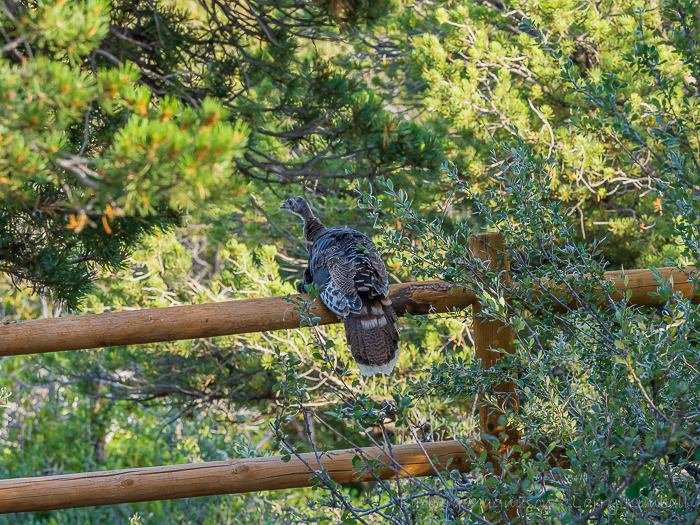
At first these get togethers seemed pretty peaceful but as the poults continued to grow, the toms would get a little aggressive and chase the poults away from a feeding area while one of the mother hens would take after one of the “spinster” hens that followed the toms around. There were times, with various birds chasing large or small targets of their ire, that it would seem to be a bit of a rodeo standing among the various factions, large birds running in several directions at once, large feet drumming across the ground.
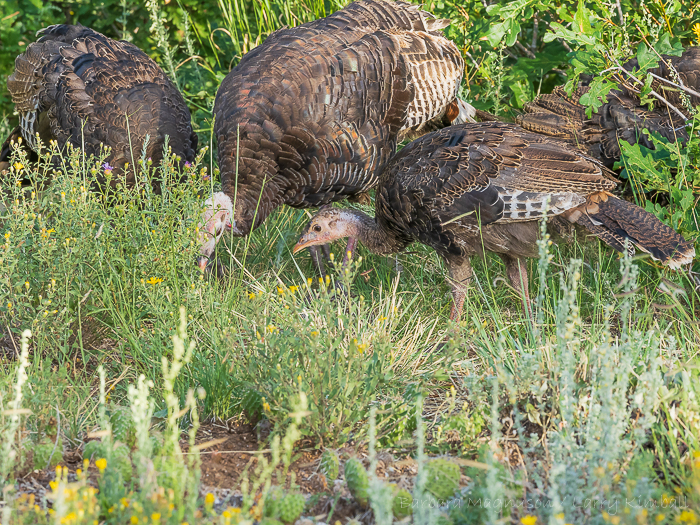
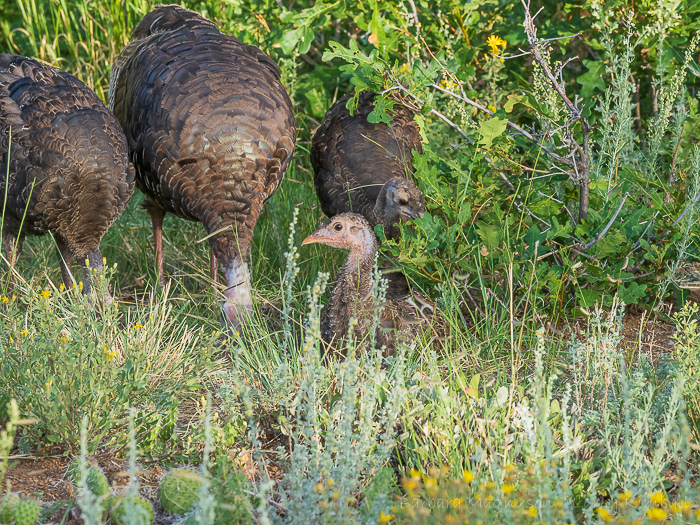
Eventually everyone would eat their fill, tank up on water and began to troop off, just as they had arrived. The grass was August tall after some good rains and it was fun watching the poults mostly disappear as they would wend their way, hens walking along, stripping the grass seeds with their beaks.
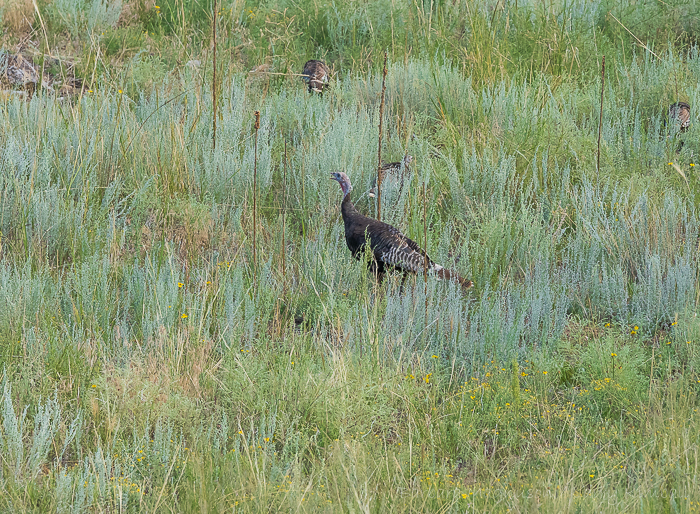
It’s November now and the toms, just three, stop by for a little cracked corn every few days. Who knows what happens to the missing, coyotes or lions (we have good populations of both) are about all that would take a mature turkey and a big tom might weigh about as much as an adult coyote, so, again, who knows? The family flocks have become notable in their absence, hopefully they will return when the cold starts in another week or two. There have been a couple of snows but they melt out fairly quickly this time of year, just not cold enough to bring those hens and their, now almost adult, kids by for a snack.
 Pronghorn Run
You must be logged in to post a comment.